Fever in Children: Home Care, Safe Medicine and When to See a Doctor
Most fevers in children are viral and pass in a few days. How to check a temperature, give paracetamol safely, spot dengue warning signs and know when to see a doctor.
Few things worry a parent like a child who feels hot to the touch, especially at night. The good news is that most fevers in children are caused by ordinary viral infections and settle in two to three days. A fever is not an illness in itself: it is the body's normal way of fighting an infection.
This guide explains how to check your child's temperature properly, what actually helps at home, how to give fever medicine safely, and the warning signs that mean your child needs a doctor.
What counts as a fever
In children, a fever is a temperature of 38°C (100.4°F) or higher. A temperature between 37.5°C and 38°C is a mild rise and often comes down on its own.
The number on the thermometer matters less than how your child looks and behaves. A child with 39.5°C who is still playing and drinking is usually less worrying than a child with 38.5°C who is floppy, refusing fluids and hard to wake. Doctors judge the child, not just the reading.
How to check your child's temperature
- Use a digital thermometer. It is cheap, quick and accurate. Avoid mercury thermometers: if one breaks, the mercury is harmful.
- Under 5 years, measure in the armpit. Place the tip high in the armpit, hold your child's arm against their side, and wait for the beep.
- Older children can use a digital thermometer under the tongue, or an ear thermometer.
- Skip forehead strips and the back of your hand. They are not reliable enough to decide whether your child has a fever.
- Wait 20 to 30 minutes after a bath or a hot drink before measuring, as both can change the reading.
Home care that helps
- Keep fluids going. Offer water, breast milk or formula, coconut water, soups, buttermilk or ORS often. Small sips every few minutes work better than a big glass a child refuses. Fever makes children lose water faster than usual.
- Dress them lightly. One thin layer and a light sheet is enough. Wrapping a child in blankets to "sweat out" a fever can push the temperature higher.
- Let them rest, but do not force it. If your child wants to play, that is a good sign.
- Food can wait. Many children eat little for a few days. Fluids matter far more than meals while the fever lasts.
- Check on them at night. Look in on your child a few times, and check for the warning signs below.
Fever medicine: how to give it safely
Fever medicine is for your child's comfort, not to bring the number down to normal. If your child has a fever but is comfortable and drinking well, there is no need to give anything.
- Paracetamol is the first choice for most children. It is usually given every 4 to 6 hours, and no more than 4 doses in 24 hours.
- Ibuprofen can be used in children over 3 months who are drinking well. Avoid it if your child is dehydrated or vomiting, and do not give it if dengue is possible (see below).
- Dose by weight, not age. The right dose depends on your child's weight. Follow the label, or ask your doctor or pharmacist for your child's dose and write it down.
- Check the strength on the bottle. Paracetamol syrups in India come in different strengths, such as 120 mg, 125 mg and 250 mg per 5 ml. Switching brands without checking is a common cause of overdosing.
- Use the syringe or cup that comes with the medicine, not a kitchen spoon.
- Do not alternate paracetamol and ibuprofen unless a doctor has told you to. It makes dosing mistakes much more likely.
- Never give aspirin or nimesulide to children. Aspirin can cause a rare but serious liver and brain illness, and nimesulide is banned in India for children under 12.
- Do not start antibiotics on your own. Most fevers are viral, and antibiotics do nothing for them. Use one only when a doctor prescribes it, and finish the course.
Fever and dengue: what parents in India should know
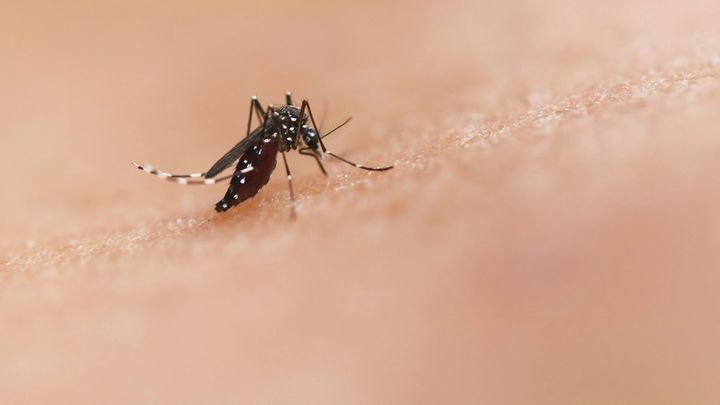
Dengue cases in India peak after the monsoon, from around September to November. Dengue usually starts with a sudden high fever, often with a severe headache, pain behind the eyes, body and joint pain, and sometimes a rash.
The most important thing to know is that the dangerous phase of dengue often comes as the fever goes down, usually between day 3 and day 7. A child who seems better because the fever has dropped still needs watching closely.
- Give paracetamol only. Avoid ibuprofen and aspirin if dengue is possible, as they raise the risk of bleeding.
- See a doctor straight away if your child has stomach pain, keeps vomiting, bleeds from the gums or nose, has black stools, is unusually sleepy or restless, or passes very little urine.
- Your doctor may order a blood test, such as an NS1 test early in the illness or a platelet count, to confirm dengue and watch its course.
Prevention matters too: use mosquito nets and repellents suitable for your child's age, cover arms and legs in the day (when dengue mosquitoes bite), and empty any standing water in coolers, pots and tyres around your home every week.
When to see a pediatrician
Book an appointment with your child's doctor if:
- Your baby is 3 to 6 months old and has a temperature of 39°C (102.2°F) or higher.
- The fever has lasted more than 3 days, or keeps coming back.
- Your child has ear pain, a sore throat with trouble swallowing, pain when passing urine, or a cough that is getting worse.
- The fever went away for a day or more and then returned.
- Your child has a long-term condition, such as heart disease, or a weak immune system.
- You are worried, or your child just does not seem like themselves. You know your child best.
What to do if your child has a febrile seizure
Some children aged 6 months to 5 years have a fit when they have a fever. These febrile seizures are frightening to watch, but most last under a few minutes and do not cause any lasting harm.
- Stay calm and stay with your child. Note the time the seizure starts.
- Lay them on their side on a safe, flat surface, away from anything hard or sharp.
- Do not put anything in their mouth, do not hold them down, and do not try to give medicine or water during the fit.
- Call an ambulance or go to the nearest hospital if the seizure lasts more than 5 minutes, if your child has trouble breathing, or if they do not wake up properly afterwards.
Even if the seizure stops quickly, have a doctor check your child afterwards, especially if it is their first one.
Going back to school or daycare
Keep your child at home until they have had no fever for 24 hours without fever medicine, and are eating and drinking normally. This helps them recover, and stops the infection spreading to other children.
The bottom line
Most fevers in children are a sign of the body doing its job, and they pass in a few days with fluids, rest and, if needed, the right dose of paracetamol. Watch your child rather than the thermometer, and act quickly on the warning signs.
If you need a children's doctor, you can find pediatricians near you on Doctor App, compare clinic timings and fees, and book a slot so you are not waiting in a crowded clinic with a sick child. Fever with a runny nose and cough? Read our guide to cough and cold in children. Seeing a new doctor? Here is how to prepare for your child's first pediatrician visit.
This article is general information, not medical advice. For your child's health, talk to a doctor.
Need to see a doctor?
Find a pediatrician near you, book a slot and skip the waiting room.
Find a doctor